Boondockers
ModelAbout
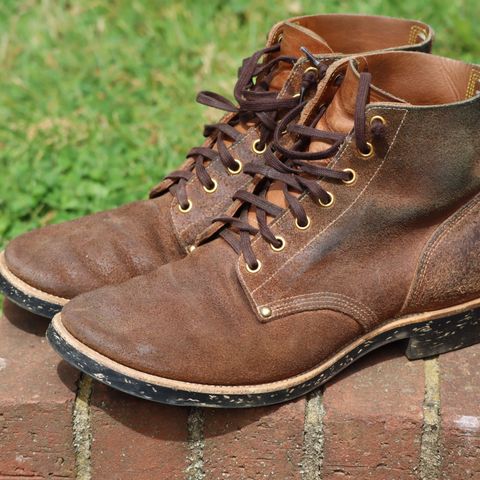
Boondockers are a style of military field boot officially designated as U.S. Navy N-1 Field Shoes, which became standard issue for American forces during World War II, particularly in the Pacific Theater. The term derives from the Tagalog word "bundok," meaning mountain, which American soldiers stationed in the Philippines during the early 20th century adopted to describe remote or rugged areas, eventually extending the colloquialism to the boots worn in such terrain.
About
Boondockers are a style of military field boot officially designated as U.S. Navy N-1 Field Shoes, which became standard issue for American forces during World War II, particularly in the Pacific Theater. The term derives from the Tagalog word "bundok," meaning mountain, which American soldiers stationed in the Philippines during the early 20th century adopted to describe remote or rugged areas, eventually extending the colloquialism to the boots worn in such terrain.
Originally designed for sailors serving on naval vessels, these boots featured practical construction suited to wet deck work aboard ships. Their robust design proved equally effective in the humid, rugged environments of the Philippines and Pacific islands, leading to widespread adoption across military branches during WWII. The boots continued in service through the Korean War and have since transitioned from specialized military gear into a staple of heritage footwear collections.
Etymology and name origin
The name "boondocker" originated from WWII military slang, with the term "boondocks" used to describe wild, heavily wooded areas. American soldiers stationed in the Philippines during the early 20th century borrowed the word from the Tagalog "bundok," which translates to mountain. As troops encountered remote and challenging terrain, the colloquial term extended to describe the field boots worn in such conditions, giving rise to the nickname "Boondocker boots."
The official military designation remained U.S. Navy N-1 Field Shoes, though the informal name gained widespread use among service members. This dual nomenclature reflects both the boots' formal military specification and their practical identity among the troops who relied on them in combat and field operations.
Military history
Boondockers became the official working shoe of the U.S. Armed Forces during World War II, serving across multiple branches of the military. While initially designed for sailors working on wet decks aboard naval vessels, their versatility made them standard issue for forces deployed in the Pacific Theater. The boots' lightweight construction provided better agility while maintaining safety, helping reduce fatigue during extended operations.
The U.S. Marine Corps adopted these boots based on their field shoe specifications, constructing them with flesh-out cowhide that provided both durability and weather resistance. Service members appreciated the practical advantages of the roughout leather construction, particularly in North Africa, where troops could upend their boots to empty sand, reducing blisters and increasing comfort during desert campaigns.
Beyond their WWII service, boondockers remained in use during the Korean War, demonstrating their continued relevance to military operations. The boots' proven performance in varied terrains and climates established them as reliable field footwear across different combat environments and time periods.
Design and construction
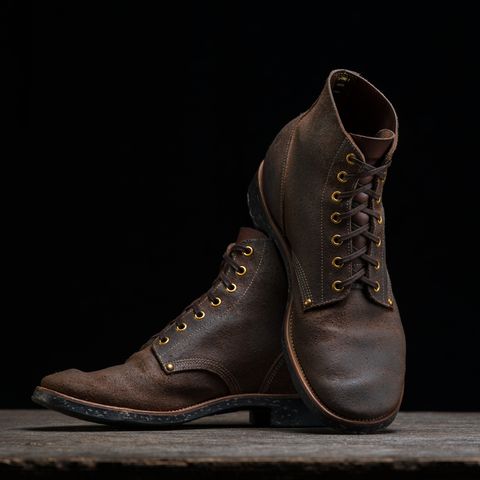
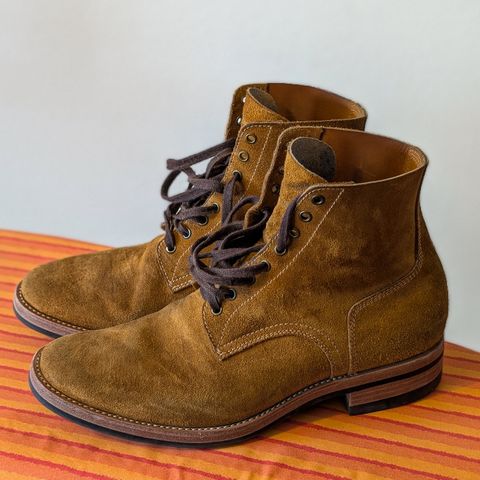
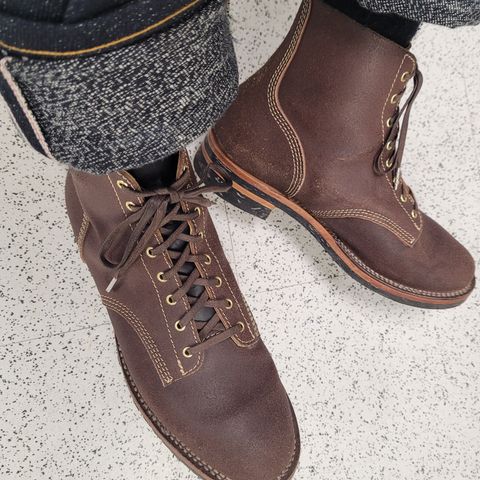
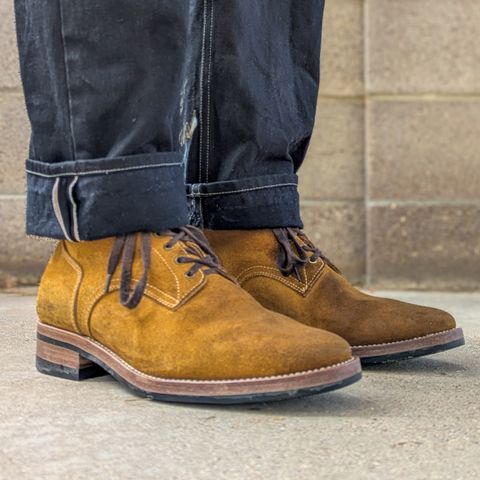
Boondockers featured an unlined, plain toe, high top blucher pattern construction, with the flesh side of the leather exposed on the exterior to create a suede-like finish. This roughout leather approach enhanced both water resistance and durability, particularly when using heavy grease-impregnated roughout steerhide in original military versions. The leather type, known as Marine Field Shoe Chromexcel, was specifically designed with the suede side facing outward.
The boots employed Goodyear welt construction, which provided strong stability and proper balance support while maintaining a secured bond to the outsole to prevent separation. This construction method allowed the boots to be resoled, significantly extending their lifespan to 10 to 15 years with proper care. The welt created a foundation that could be rebuilt multiple times, making the boots economically sustainable for military use and later civilian ownership.
During wartime material shortages, manufacturers made several practical adaptations. In 1944, toe caps and rivets were removed from the design due to material conservation needs. The soles incorporated repurposed car tires and leftover nylon, with corded composition rubber providing both resilience and grip. This reclaimed rubber sole and heel, infused with fiber cording, created a distinctive speckled pattern that became characteristic of the style.
Original specifications included classic boondocker-style white contrast stitching, with quadruple-needle stitching at the vamp and triple-needle stitching at the heel. The boots featured an unstructured toe box designed to collapse naturally with wear, rather than maintaining a rigid shape. Steel shanks provided extra support around the arch, while aluminum eyelets completed the functional hardware package. Government markings identified military-issue versions, distinguishing them from later civilian reproductions.
Modern versions have evolved the original specifications while maintaining core design elements. Contemporary reproductions use nitrile rubber compound and hemp for added traction and durability in the soles, replacing the wartime materials. The roughout-leather uppers typically receive a tan dye, creating the recognizable appearance associated with the style. Natural midsole construction preserves the traditional approach while supporting the boots' resoling capability.
Cultural impact
Actor Steve McQueen wore boondocker boots in the 1963 film "The Great Escape," portraying the character Virgil Hilts. McQueen's rugged personal style and the film's enduring popularity brought these military boots into the fashion spotlight, introducing them to audiences beyond military and work contexts.
This exposure contributed to the boots' transformation from specialized military gear into a fashion staple embraced by heritage footwear enthusiasts. The blend of functionality, durability, and timeless design continues to attract collectors and wearers interested in authentic military-inspired footwear with historical significance.
Modern reproductions
Contemporary manufacturers produce boondockers faithful to original military specifications while incorporating modern materials and construction standards. Viberg's N1 Boot uses Horween roughout leather from the same tannery that supplied the U.S. military during WWII, maintaining historical authenticity in material sourcing. Some reproduction companies have created boots specifically for historical productions, including versions made for the HBO miniseries "The Pacific," where manufacturers ensured period-accurate details throughout.
Reproduction boots typically feature Goodyear welt construction, rubber soles and heels, and heavy grease-impregnated roughout steerhide leather, matching original military specifications. Aluminum eyelets with government-style markings complete the authentic appearance, though contemporary versions may use modern rubber compounds for improved performance. Manufacturers like Golden Fox offer updated interpretations with features such as full-grain Crazy Horse leather, pigskin collars, oil- and slip-resistant crepe rubber outsoles, arch-supported insoles, and steel shanks, adapting the traditional design for civilian work and casual wear while preserving the essential character of the original military boot.
References
"Boondocker Boots: A Comprehensive Guide to Their History, Evolution, and Modern Interpretations". Uncle Hector. Retrieved November 28, 2025.
"Classic WWII Boondocker Boots". Golden Fox USA. Retrieved November 28, 2025.
"WWII USMC Boondocker Boots". At The Front. Retrieved November 28, 2025.
"The Ultimate Guide to Men's Boots: Boondocker, Combat, and Chelsea Styles". Uncle Hector. Retrieved November 28, 2025.
"The Legacy of Boondocker Boots: From Military Origins to Modern Style". Hector Maden. Retrieved November 28, 2025.
"USMC Boondocker Boots". SM Wholesale USA. Retrieved November 28, 2025.
"Original U.S. WWII Pair of Marine Corps Unissued USMC Boondocker Boots by International Shoe Co". International Military Antiques. Retrieved November 28, 2025.
"Field Shoes N-1". The Real McCoy's. Retrieved November 28, 2025.
"US Navy Boondockers: Exploring the Durable Footwear for Sailors". News Military. Retrieved November 28, 2025.