About
Compiel Horsebutt is a vegetable-tanned horsehide leather produced by COMIPEL S.r.l., an Italian tannery based in Morrovalle, Italy. The leather is sourced from the hindquarter region of horses, specifically the butt and hip area just above the shell cordovan, extending from the hip down to each cheek. COMIPEL processes this leather using traditional vegetable tanning methods combined with modern craftsmanship, creating a material characterized by its durability and distinctive aging characteristics.
About
Compiel Horsebutt is a vegetable-tanned horsehide leather produced by COMIPEL S.r.l., an Italian tannery based in Morrovalle, Italy. The leather is sourced from the hindquarter region of horses, specifically the butt and hip area just above the shell cordovan, extending from the hip down to each cheek. COMIPEL processes this leather using traditional vegetable tanning methods combined with modern craftsmanship, creating a material characterized by its durability and distinctive aging characteristics.
Material origin and characteristics
Horsebutt leather comes from the anatomical region of the horse known as the "strip" or "butt section," which refers to the hindquarter area. This section is cut at right angles to the horse's backbone, producing distinct front and butt portions. The butt section is located just above the shell cordovan region on the horse's rump.
The anatomical location of horsebutt results in leather with substantial thickness and durability. Horsebutt typically ranges from 4 to 10 ounces or 1.6 millimeters to 4 millimeters in thickness, making it thicker than front quarter horsehide. This increased thickness allows horsebutt to be used in weights over 50 percent higher than standard boot leather. The leather is thicker, heavier, and stiffer than front quarter horsehide, particularly when processed using vegetable tanning methods.
Tanning process
COMIPEL processes horsebutt using vegetable tanning methods. This traditional tanning approach uses natural tannins rather than chemical agents, resulting in leather that develops distinctive aging characteristics over time. The vegetable tanning process allows the natural tannins to fully penetrate and stabilize the hide structure, creating a dense and durable material suitable for demanding applications.
Surface characteristics and aging
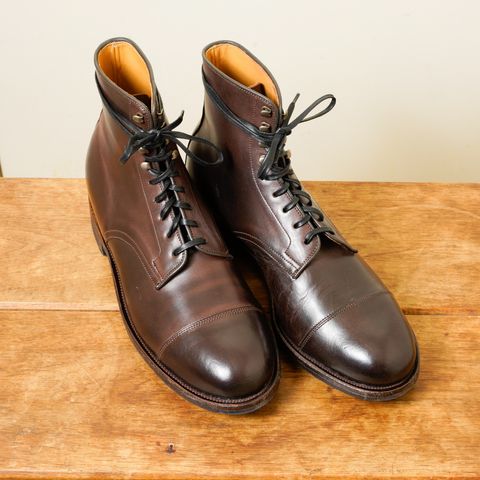
COMIPEL horsebutt is available in brown and black colors. The brown color is described as beautiful in depth of color. The leather develops aging characteristics through use and exposure to environmental elements. The finish can be restored to a shine when brushed for approximately 10 minutes with a horsehair brush, demonstrating the leather's ability to maintain its appearance through regular care.
Durability and performance
COMIPEL horsebutt demonstrates durability characteristics suitable for demanding applications. The leather maintains consistent coloring through wear, with stains from cooking oils and cleaning agents blending in evenly over time rather than creating permanent blemishes. This performance characteristic reflects the leather's dense fiber structure and vegetable tanning process.
The thickness and stiffness of vegetable-tanned horsebutt contribute to its durability profile. The material's substantial weight and density provide resistance to wear and abrasion. The natural tanning agents used in vegetable tanning create chemical bonds within the leather structure that enhance its long-term stability and resistance to degradation.
Applications and uses
COMIPEL horsebutt is used in high-end footwear production, particularly for premium boots. The leather's thickness, durability, and aging characteristics make it suitable for demanding footwear applications. Boot manufacturers pair the leather with rugged construction elements including commando and ridgeway soles to create boots capable of extended wear in challenging conditions.
Canadian bootmaker Viberg has produced multiple boot models using COMIPEL horsebutt, including Service Boots and Halkett boots. Blue Owl Workshop has offered Service Boots featuring COMIPEL Nero (black) horsehide. These applications demonstrate the leather's suitability for premium footwear construction where durability and aesthetic development over time are priorities.
Color options
COMIPEL produces horsebutt in brown and black colors. These color options represent the documented range available for this leather type. The black color, marketed as Nero, provides an alternative aesthetic while maintaining the same durability and aging characteristics inherent to the leather type.
Market position
COMIPEL horsebutt is used by premium boot makers including Viberg and retailers such as Blue Owl Workshop. The leather is specified for high-end footwear production where durability and material quality are priorities. COMIPEL's horsebutt production represents their participation in the specialized market for premium horsehide materials used in heritage footwear construction.
Distinction from other horsehide types
Horsebutt is anatomically and functionally distinct from other horsehide products. While shell cordovan comes from the flat fibrous muscle on the horse's rump, horsebutt is cut from the butt and hip area just above this region. Front quarter horsehide originates from the forward part of the horse and is thinner, lighter, and more flexible than horsebutt.
The thickness differential between these horsehide types determines their traditional applications. Front quarters are used for jackets due to their thinness and flexibility, while horsebutt is specified for boots and other applications requiring greater thickness and durability. The anatomical location of each section creates distinct material properties that suit different manufacturing purposes.
References
"Dark Horse Service Boot in Comipel Nero Horsehide". Blue Owl Workshop. Retrieved October 23, 2025.
"By Request: What's the Difference?". Horween Leather Blog. December 14, 2010. Retrieved October 23, 2025.