About
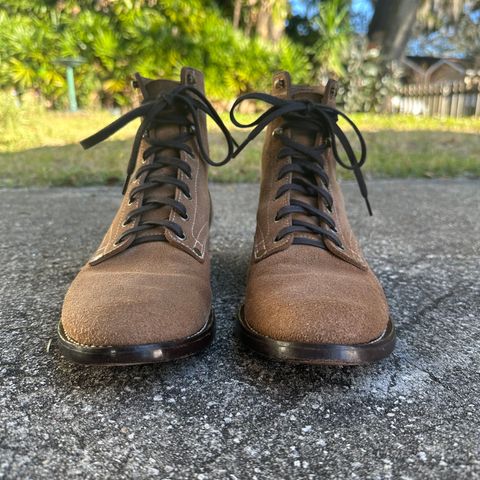
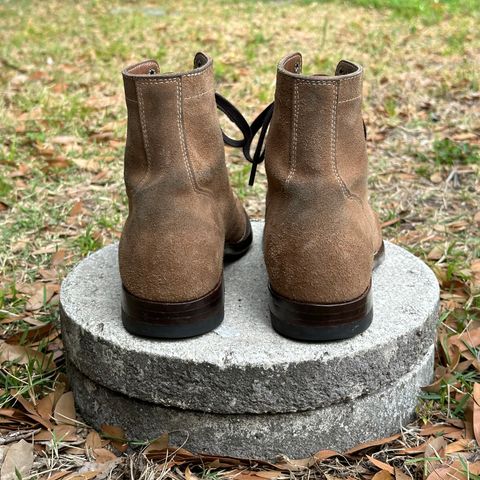
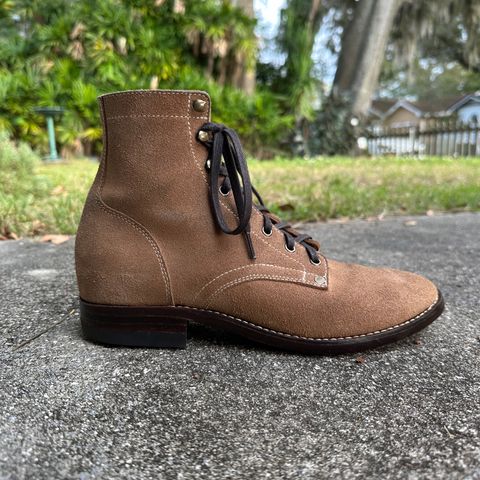
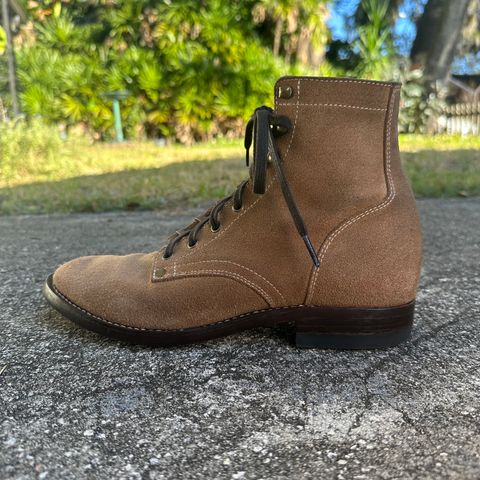
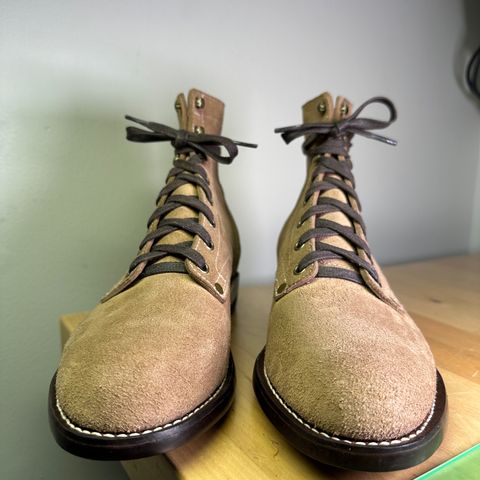
The Service Boot is a lace-up boot style with ankle coverage, originally designed to provide support on rugged terrain for military service members during the world wars. The style originated from derby boots standard in many armies during the 1800s and early 1900s, with the original service boot called the Trench Boot. Service boots typically feature welted construction, a hardwearing sole with a low block heel, and a leather upper with either a plain toe or cap toe design.
About
The Service Boot is a lace-up boot style with ankle coverage, originally designed to provide support on rugged terrain for military service members during the world wars. The style originated from derby boots standard in many armies during the 1800s and early 1900s, with the original service boot called the Trench Boot. Service boots typically feature welted construction, a hardwearing sole with a low block heel, and a leather upper with either a plain toe or cap toe design.
The style gained cultural prominence beyond military use following the 1963 film "The Great Escape" starring Steve McQueen, which spurred interest in military-style footwear in the United States and Japan. Service boots have since become a cornerstone of heritage workwear fashion, produced by manufacturers ranging from high fashion designers to reproduction brands.
History and military origins
During World War I, U.S. soldiers initially wore Russet Marching Shoes made of machine-sewn calfskin, which did not hold up to the French terrain and led to trench foot, a condition where the foot rots due to prolonged exposure to moisture and cold temperatures. In January 1918, General John Pershing of the U.S. Army approved changes to create the Trench Boot, often called the "Pershing Boot," featuring thicker leather, waterproofing, a triple-thick sole, and iron toe cleats.
The development of service boots was influenced by research conducted by Edward L. Munson, who in 1912 published a book entitled "The Soldier's Foot and the Military Shoe." His research, which extended over four years and included the critical study of the feet of some two thousand soldiers, led to the creation of the Munson last. This last featured a wide toe box designed to contour the foot without putting pressure on the toes and can still be found in footwear produced by manufacturers such as Red Wing Boots and John Lofgren.
During World War II, the standard issue U.S. military boot was the M-42 'Service Shoe,' an all-leather toe cap boot with a two-piece stitched sole. This style was eventually replaced by the rough-out boot, probably the most recognizable boot of the war.
Despite decades of military history, the Service Shoe did not enter popular culture until 1963 with the release of John Sturges' World War II POW film "The Great Escape," starring Steve McQueen. In the film, McQueen's character Captain Virgil Hilts wears the Type III Service Boot with an A-2 Bomber Jacket and khakis. The film helped spur the movement toward military style in the United States and created fervent interest in Service Shoes in Japan.
Construction
Service boots commonly utilize Goodyear welt construction, a method that involves stitching the boot's upper to the sole using a leather strip called a "welt" that joins the sections along the sole's perimeter. The welt is first adhered to the upper via a stitch to the canvas plyrib on the bottom of the insole, then stitched to the outsole, making the shoe easily resoleable and virtually waterproof.
Charles Goodyear Jr. patented a stitching machine in 1875 that improved the durability and production of welted boots, making high-quality welted footwear achievable at scale. Prior to the 19th century, welted construction was done entirely by hand, which limited production volumes and made it prohibitively expensive for most people.
The Goodyear welt creates a small cavity underneath the insoles that is filled with granulated cork, which cushions the wearer's stride and molds to the feet over time. Hand welted construction, while essentially the same technique as the Goodyear welt, is not done by machine and is considered higher quality, though very few shoemakers use this method as it is extremely time-consuming. Custom bootmaking construction typically takes about 40 hours but can range from 12 hours to hundreds of hours, with some boots taking 155 hands-on hours.
Design characteristics
A classic service boot typically features welted construction, a hardwearing sole with a low block heel, and a leather upper with either a plain or capped toe. Plain toe boots feature a toe made from a single piece of leather without additional adornments or designs, also called "round toe" boots. Cap toe boots have an extra piece of leather on the toe forming the "cap," identifiable by a stitch line across the upper by the toe box.
In work boots, the cap toe's extra leather layer can provide additional protection from wear and impact. However, in dressier cap toe boots, the cap may serve only as a style element without providing this protective layer. Service boots are designed with durability in mind, featuring robust construction and high-quality materials that can withstand various weather conditions and everyday wear.
References
"The Fascinating History of American Military Boots". Camel City Mill. Retrieved December 1, 2025.
"The Australian Service Boot - An inspiring heritage (part II)". Thomas George Collection. Retrieved December 1, 2025.
"Goodyear Welt Construction: Why It Matters". Thursday Boot Company. Retrieved December 1, 2025.
"A Step-by-Step Guide to the Custom Bootmaking Process". Buck's Boots Oregon. March 31, 2023. Retrieved December 1, 2025.
"What is a Service Boot? (Explained)". Workwear Command. Retrieved December 1, 2025.