About
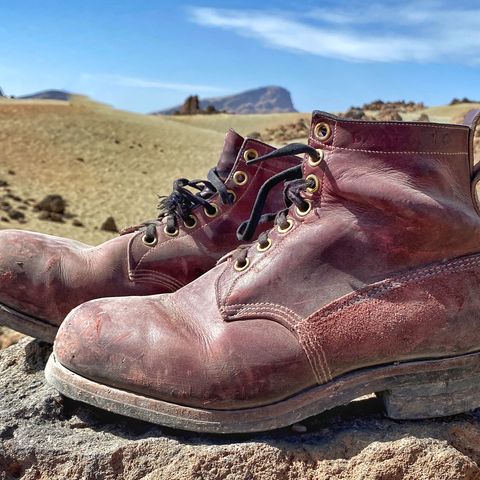
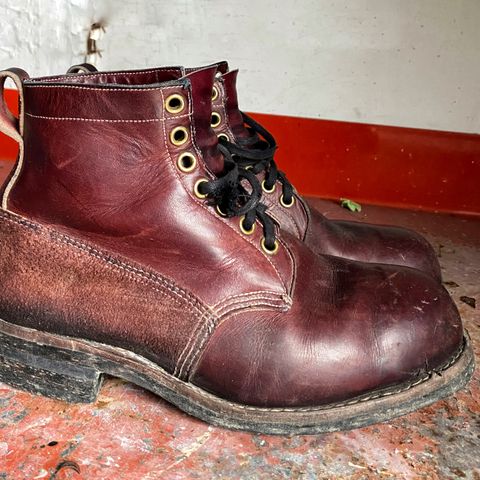
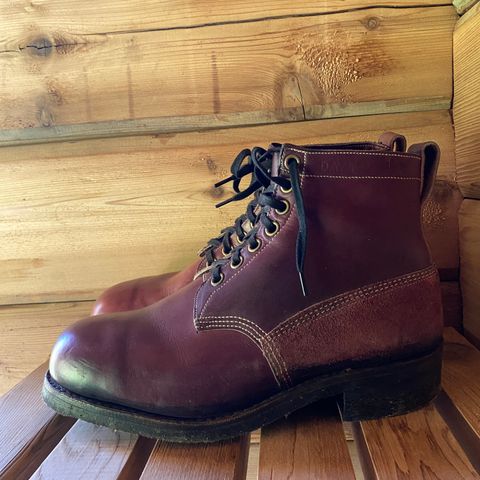
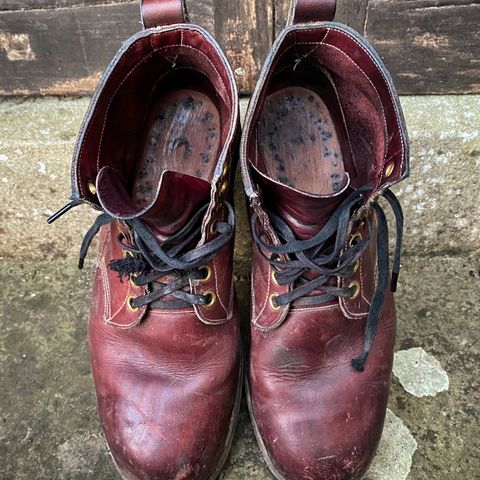
The 9496 Steel Toe is a vintage work boot model manufactured by Dayton Boots, a Canadian bootmaker established in 1946 in Vancouver, British Columbia. This model represents the company's traditional steel toe work boot configuration, designed for workers requiring safety footwear in demanding industrial environments. Examples of the 9496 Steel Toe from the 1960s and 1970s exist as new old stock, indicating the model's production during the post-World War II period when British Columbia's logging and industrial sectors expanded rapidly.
About
The 9496 Steel Toe is a vintage work boot model manufactured by Dayton Boots, a Canadian bootmaker established in 1946 in Vancouver, British Columbia. This model represents the company's traditional steel toe work boot configuration, designed for workers requiring safety footwear in demanding industrial environments. Examples of the 9496 Steel Toe from the 1960s and 1970s exist as new old stock, indicating the model's production during the post-World War II period when British Columbia's logging and industrial sectors expanded rapidly.
The 9496 Steel Toe embodies Dayton's commitment to handcrafted construction methods developed for the Pacific Northwest logging industry, featuring the heavy-duty materials and traditional techniques that established the company's reputation among workers in construction, logging, and other industrial occupations.
Historical Context
Dayton Boots was founded in 1946 by Charlie Wohlford, who established the company in response to demand from loggers requiring durable work boots. The first location opened at 950 Commercial Drive in 1947, with the factory moving to 2345 E Hastings in 1950 and later relocating to 2248 E Hastings. The current location at 2250 E Hastings Street in Vancouver's Grandview neighbourhood has housed the operation for decades.
The company's establishment coincided with significant expansion of British Columbia's resource industries. Over 25 pulp mills opened on BC's coast in the two decades following World War II, creating substantial demand for protective work footwear. This industrial growth provided the market foundation for Dayton's specialized steel toe work boots, including the 9496 model.
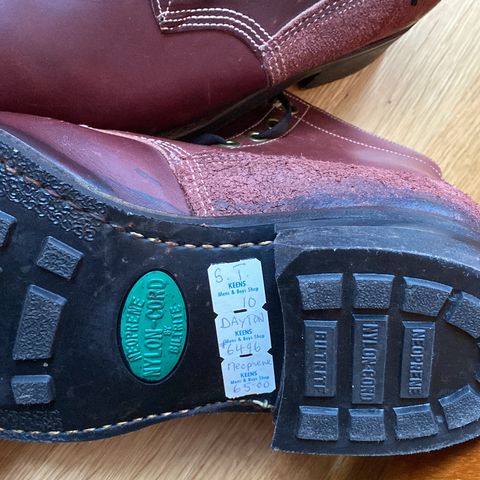
The 9496 Steel Toe appears to have been produced during the 1960s and 1970s based on new old stock examples bearing original price tags from retailers of that era. This period represented peak demand for industrial work boots in British Columbia's resource extraction economy.
Construction
The 9496 Steel Toe follows Dayton's traditional construction methods established in the 1940s. The company employs both hand-nailed construction and Goodyear welt construction, techniques requiring over 230 individual steps to complete each pair of boots. This labor-intensive process places Dayton among the small number of bootmakers worldwide still using traditional hand-crafting methods.
Construction Features:
Goodyear Welt Construction: Hand-sewn welt attaching upper to sole, providing water resistance and enabling resoling throughout the boot's life. In the early 1960s, Dayton added Goodyear welt construction to its hand-nailed production line, allowing diversification into lighter footwear styles while maintaining durability standards.
Steel Reinforced Toe: Protective steel toe cap meeting safety requirements for industrial work environments
Steel Shank: Provides arch support and maintains structural integrity under load
Double or Triple Stitching: All components sewn with multiple passes for durability, using waxed thread that seals stitch holes
Three-Quarter Welt: Dayton uses a 3/4 welt design, which the company maintains provides a sturdier heel construction compared to full 360-degree welts
The Goodyear welt construction method doubles boot life expectancy, increases water resistance, and allows the boots to gradually mold to the wearer's foot shape. The welt attachment enables complete sole replacement while preserving the upper leather and overall boot structure, facilitating repairs that can extend serviceable life to 25-40 years.
Materials
Dayton specifies full-grain leather for the 9496 Steel Toe's construction, maintaining the company's standards established at founding. The leather weight ranges from 5.5 to 7 ounces in thickness, hand-cut to ensure consistency of grain pattern and thickness throughout each boot.
Component Materials:
Upper Leather: Full-grain oil-tanned cowhide, 5.5-7 oz weight
Insoles and Outsoles: Full-grain leather, 6-12 iron grade, providing structural foundation (Dayton does not use cardboard in insole construction)
Lining: Leather lining for breathability and moisture management
Sole: Vibram 100 Nitrile compound, non-slip and resistant to oil and chemical exposure
Hardware: Nickel-plated or brass eyelets providing corrosion resistance
The material specifications reflect Dayton's focus on durability over cost reduction. The full-grain leather retains the natural grain surface of the hide, providing superior wear resistance compared to corrected grain or split leathers.
Durability and Maintenance
The 9496 Steel Toe's construction enables extended service life when properly maintained. The Goodyear welted, fully nailed construction allows boots to be resoled multiple times, with the upper leather and welt structure remaining serviceable long after sole replacement becomes necessary.
Dayton's construction methods support boots remaining in active use for 25 to 40 years, though this lifespan requires appropriate care and periodic resoling. The steel shank provides lasting arch support that does not deteriorate with age, and the triple-stitched construction resists failure even under demanding use conditions.
The company's limited lifetime warranty covers manufacturing defects but excludes normal wear and tear. The warranty reflects confidence in construction quality while acknowledging that work boot applications inevitably cause material degradation requiring maintenance and eventual resoling.
References
"Dayton Boots Factory". Vancouver Heritage Foundation. Retrieved December 2, 2025.
"Wohlford quality difference". Wohlford & Co. Retrieved December 2, 2025.
"The Goodyear Welted Method of Manufacturing Leather Boots". Wohlford & Co. Retrieved December 2, 2025.