About
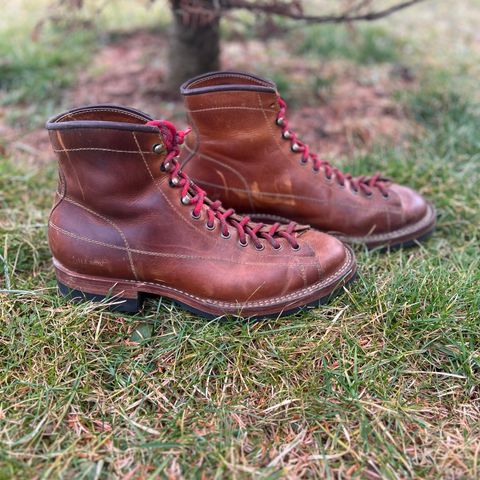
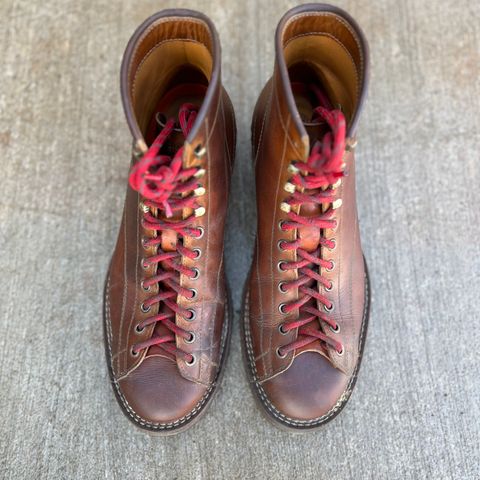
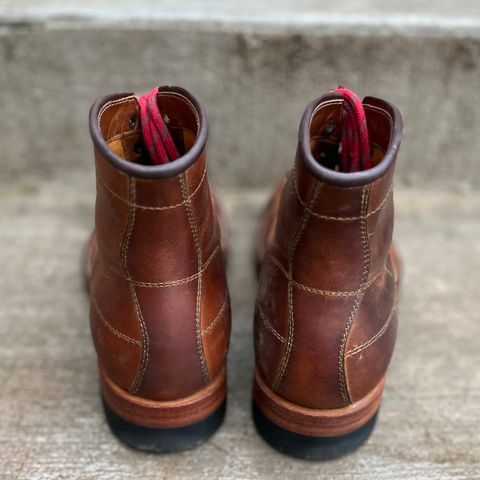
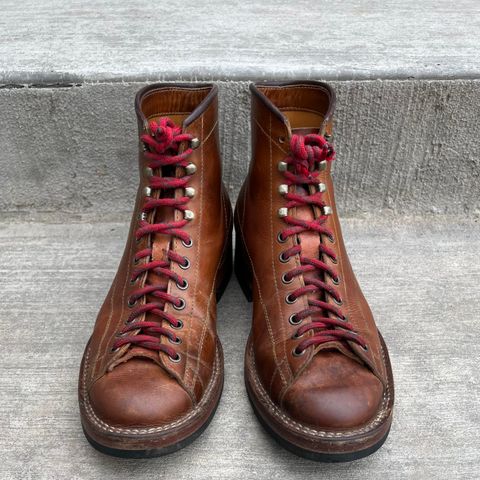
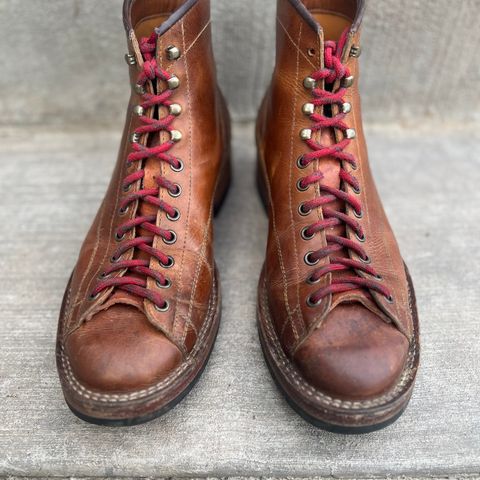
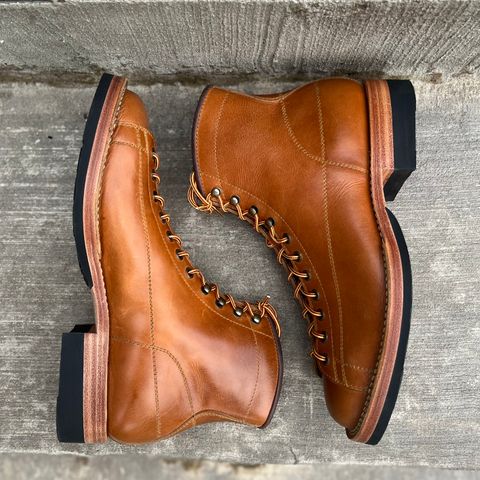
The Monkey Boot is a military-style ankle boot made to order by Hidalgo Boots, an Indonesian bootmaker based in Bandung. The boot features leather construction with a distinctive tractor tire sole and follows the traditional monkey boot design that originated as Czechoslovakian army footwear during the 1940s and 1950s.
About
The Monkey Boot is a military-style ankle boot made to order by Hidalgo Boots, an Indonesian bootmaker based in Bandung. The boot features leather construction with a distinctive tractor tire sole and follows the traditional monkey boot design that originated as Czechoslovakian army footwear during the 1940s and 1950s.
Hidalgo Boots produces the Monkey Boot using made-to-order methods characteristic of Indonesian bootmaking, where customers select leather, pattern, hardware, and construction details. A documented example features Indonesian Java Brown Pull Up leather with a Dr. Sole #1091 Cork Half Sole and Black/Yellow Plugs.
Historical origins
Monkey boots originated in Czechoslovakia during World War II as military footwear. The boots were engineered for work with thick leather and substantial rubber soles. Original Czechoslovak producers included Svit, Zuch, and Cebo.
The boots transitioned from exclusive military use to public adoption in the 1960s, coinciding with the emergence of mod culture. Working-class Mods adopted the style for its affordable, refined style and as a rejection of mainstream footwear trends. The boots appeared prominently with ska bands like The Jam and The Specials, bridging mod and early skinhead aesthetics.
In the 1970s, "Hard Mods" adopted a tougher aesthetic, with monkey boots becoming standard wear. During the 1980s, the style found audiences among American punk, skater, and goth subcultures. Teenagers embraced them as an affordable antidote to mainstream choices and symbols of personal expression.
Design and construction
Monkey boots are characterized by their ankle-length silhouette with rugged tractor soles and signature butterfly stitch detailing. The distinctive tractor tire tread pattern features a teeth-like shape along the edge. Leather is typically oxblood red or black, rising to the ankle with leather trim. Bright contrasting thread stitching appears in an M-shape pattern across the heel and shoe middle. Laces are traditionally yellow when paired with oxblood leather, or black.
Many monkey boots feature lace-to-toe design, which adds rigidity to the toe box. This keeps the toes from flexing further than they should while spreading lace tension over a larger area. The design allows wearers to lace their boots to support their feet without making the ankle or other parts of the boot too tight. In the 1940s, Red Wing developed their work boot Style 2996—the Lineman—with a lace-to-toe design constructed for workers climbing electrical poles for security and stability.
Indonesian production
The center for the shoe industry in Indonesia is located in the Cibaduyut region of Bandung, a few hours away from the capital Jakarta. The Dutch introduced welted shoemaking techniques during their colonial period until the 1940s.
Indonesian bootmakers primarily use hand-welted construction at remarkably affordable prices. Entry-level hand-welted shoes start around €170–€185 domestically, with premium models reaching €550.
UK manufacturing heritage
NPS Shoes was established in 1881 as the Northamptonshire Productive Society, a worker co-operative in Wollaston, Northamptonshire, England. From 1959 onward, NPS produced footwear featuring air-cushioned sole technology. For 35 years, NPS produced Solovair boots and shoes under licence, which were sold under the name "Dr Martens by Solovair." NPS registered the Solovair trademark in 1994 and discontinued licensed production.
The heritage of monkey boots remains represented in today's market by higher-quality brands like George Cox and Solovair, which continue to produce the original style.
References
"Hidalgo Boots Monkey Boot in Indonesian Java Brown Pull Up". Patina Project. Retrieved December 2, 2025.
"The History of The Monkey Boot". Mazeys UK. Retrieved January 19, 2026.
"Subcultural Staples: The Monkey Boot". George Cox Footwear. Retrieved January 19, 2026.
"What Is The Purpose Of Lace To Toe Boots?". Nicks Boots. Retrieved December 2, 2025.
"History of the Ethan Monkey Boot". Tricker's. Retrieved December 2, 2025.
"History". NPS Solovair. Retrieved January 19, 2026.
"Buyer's Guide Indonesian Quality Shoes". Shoegazing. May 24, 2020.