About
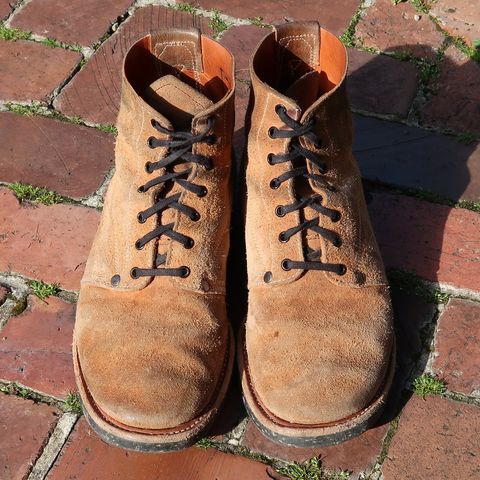
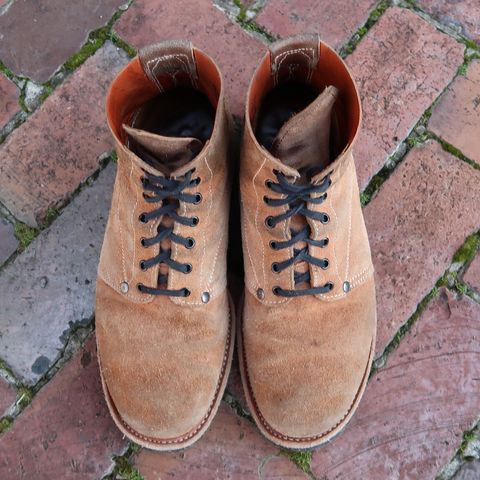
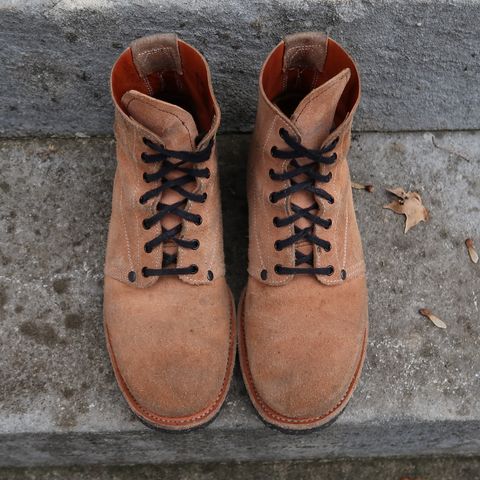
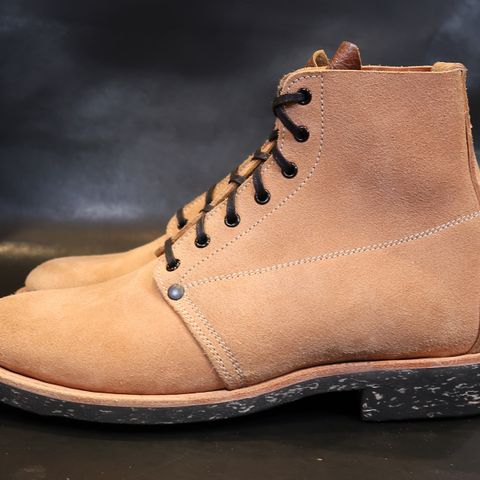
English Tan Dublin Roughout is a color variant of Horween Leather Company's Dublin roughout leather, characterized by a warm tan hue that develops distinctive patina through wear. This vegetable-tanned leather combines Horween's century-old tanning formulas with specialized waxing treatments to create a material prized by heritage boot manufacturers for its durability and aging characteristics.
About
English Tan Dublin Roughout is a color variant of Horween Leather Company's Dublin roughout leather, characterized by a warm tan hue that develops distinctive patina through wear. This vegetable-tanned leather combines Horween's century-old tanning formulas with specialized waxing treatments to create a material prized by heritage boot manufacturers for its durability and aging characteristics.
English Tan represents one of ten available colors in Horween's Dublin line, a leather that incorporates traditional vegetable tanning methods with modern finishing techniques. The leather is known for color variations between batches due to differences in oil and wax absorption, making each hide unique in appearance.
Tanning Process
Dublin leather is produced using Horween's Cordovan vegetable tanning liquor formulas, which date back over 100 years. The process begins with traditional pit tanning methods utilizing 8-foot deep pits, a technique Horween has employed since making their own vegetable liqueur from tree extracts beginning in 1905.
The leather undergoes hot stuffing, where unrefined fats and oils nourish the leather fibers to prevent breakdown over time. This process uses materials that remain solid at room temperature and are worked into the leather through tumbling in heated barrels. Manual hand swabbing occurs 3-5 times during production to build color depth, followed by toggling, where the leather is stretched on frames to create a pronounced grain pattern.
Characteristics
English Tan Dublin incorporates a richer blend of oils and waxes than traditional vegetable-tanned leathers, resulting in material that ages well over extended use. The leather displays a strong pull-up effect, where bending or flexing creates tonal variations on the surface that can be buffed back to near-original appearance.
The finishing process involves infusing the vegetable-tanned base with natural waxes before hot plating under heated rollers. This creates a more rustic appearance compared to Horween's Essex base leather while maintaining supple characteristics and showcasing natural grain patterns. Dublin sides typically measure between 18-22 square feet and are available in weights ranging from 3-4 oz (1.2-1.6 mm) to 8-9 oz (3.2-3.6 mm).
Manufacturing Heritage
The Dublin line represents part of the Essex family of leathers, which required nearly three years of development at Horween to perfect. The company has maintained traditional manufacturing methods, with air drying allowing leather fibers to relax naturally and specialized techniques passed down through generations.
Horween's vegetable tanning process produces what the company describes as a more neutral color compared to chrome tanning methods. The traditional approach includes careful sorting of each hide to determine appropriate final applications, with quality control measures ensuring consistency within the natural variation inherent to the material.
Applications in Heritage Footwear
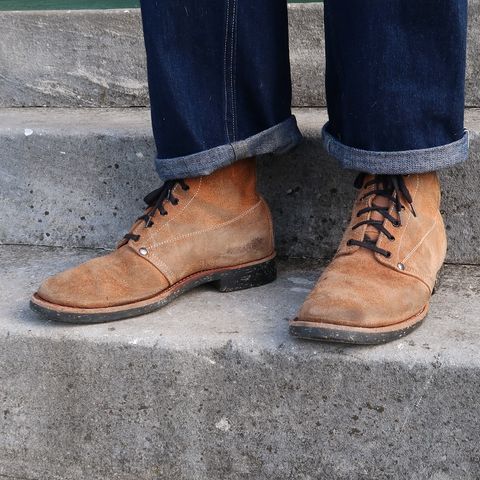
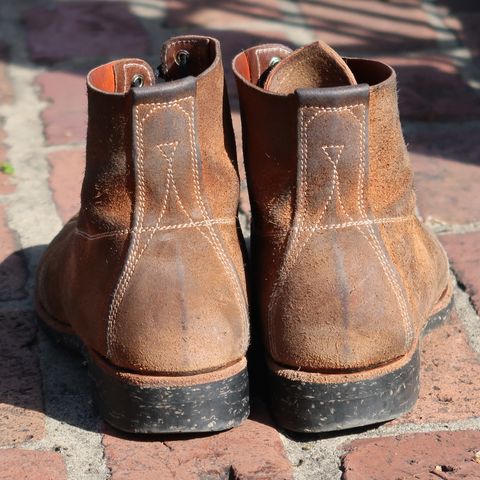
English Tan Dublin serves as upper material for heritage boots produced by established American manufacturers. The leather's durability characteristics and aging properties make it suitable for work boot and service boot construction, particularly when paired with Goodyear welt construction methods.
Boot manufacturers value the material's ability to develop character through wear while maintaining structural integrity. The leather's pull-up characteristics create visual interest as boots age, with areas of higher wear developing darker tones that can be maintained or allowed to develop naturally depending on care preferences.
References
"Horween Leather Company". Horween Leather Company. Retrieved September 6, 2025.
"Horween Dublin Leather". The Tannery Row. Retrieved September 6, 2025.
"The Tanning Process: A look inside the Horween Leather Company". The Tannery Row. Retrieved September 6, 2025.