About
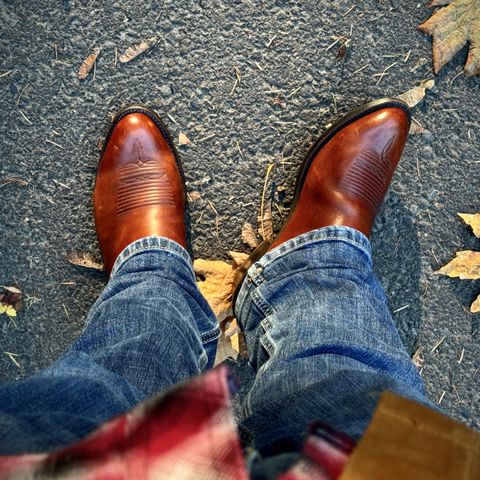
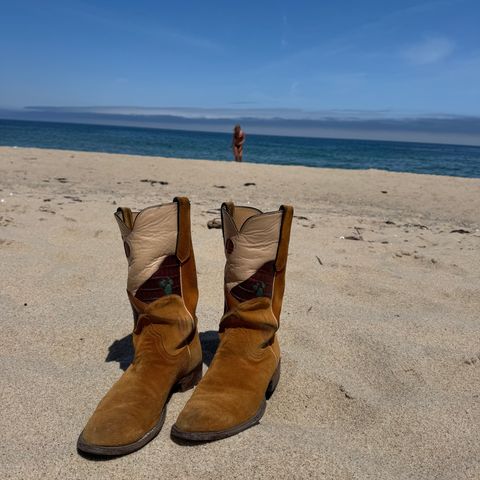
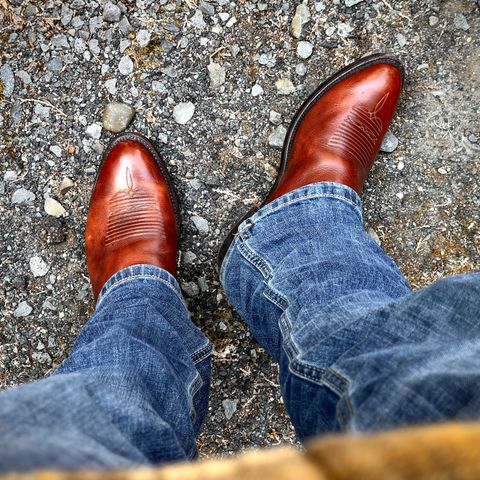
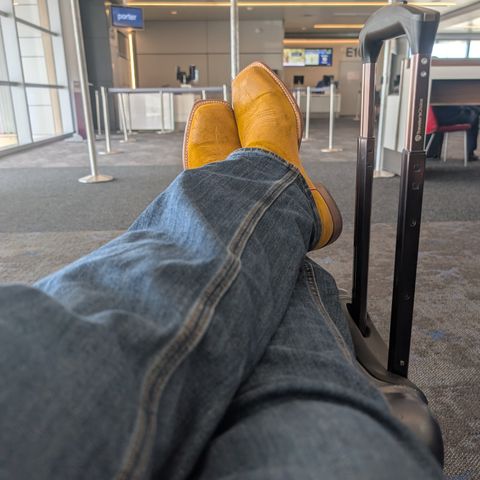
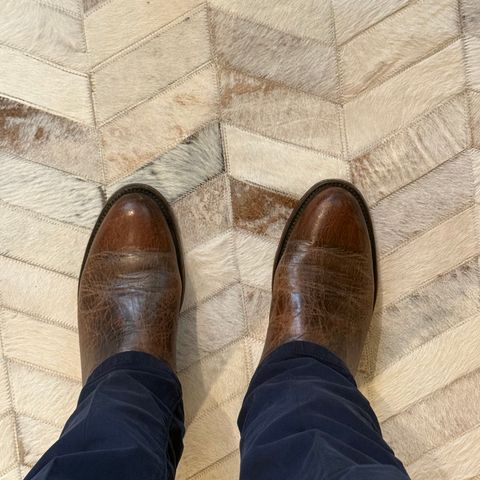
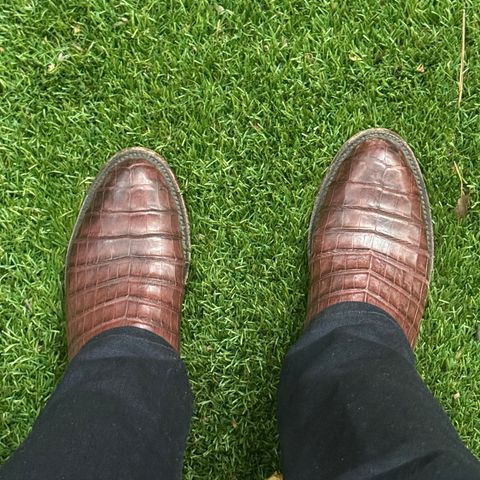
Cowboy Boots by Lucchese Bootmaker are handmade Western boots produced since 1883 through traditional craftsmanship techniques developed by Italian immigrants in San Antonio, Texas. Each pair undergoes over 200 individual production steps completed by as many as 200 artisans at the company's El Paso manufacturing facility, with the entire process taking four to six weeks. The boots feature construction methods including lemonwood pegging and hand-lasting that allow them to conform to the wearer's foot over time while maintaining structural integrity for resoling.
About
Cowboy Boots by Lucchese Bootmaker are handmade Western boots produced since 1883 through traditional craftsmanship techniques developed by Italian immigrants in San Antonio, Texas. Each pair undergoes over 200 individual production steps completed by as many as 200 artisans at the company's El Paso manufacturing facility, with the entire process taking four to six weeks. The boots feature construction methods including lemonwood pegging and hand-lasting that allow them to conform to the wearer's foot over time while maintaining structural integrity for resoling.
Lucchese has counted presidents, entertainers, and everyday wearers among its clientele for over 140 years, producing boots in both traditional calf leather and exotic materials including alligator, ostrich, elephant, buffalo, and sharkskin. The company continues manufacturing the majority of its products in the United States using many of the same old-world techniques its founders established at the turn of the 20th century.
History and heritage
The cowboy boot would be perfected by the Lucchese brothers, two Italian immigrants who arrived in Texas in 1882 as sons of Gaetano Lucchese, a respected Italian shoemaker from Sicily. The brothers applied their old-world cobbling skills in the military town of San Antonio, where fort and cavalry demand kept their shop busy. When Salvatore Lucchese opened the company's boot shop in San Antonio in 1883, he established traditional craftsmanship methods that would be pursued for over 140 years.
President Lyndon B. Johnson was a customer for decades, joined by other notable clientele including singer Bing Crosby, actor James Garner, and Zsa Zsa Gabor. In 1949, Acme Boots commissioned Lucchese to build a collection of state boots for an advertising campaign. The team spent four years completing the entire collection, with every pair featuring each state's flag, capital, bird, flower, and state commodity.
In 1986, the company transferred its headquarters from San Antonio to El Paso, where the main production facility remains today.
Production process
Every boot is made one at a time rather than in batches, with each pair progressing through more than 200 individual handcrafted steps. The entire production process requires roughly four to six weeks to complete. At the El Paso manufacturing facility, as many as 200 artisans touch each boot during construction.
Foundation and pattern making
Before the leather, before the stitching, before the finishing touches, construction begins with the last, the foundation of every boot. After the last is designed and built, patterns must be made for each size of boot to fit a variety of customers. The patternmaker must account for all variables in how the leather will stretch over the boot last.
Leather selection and cutting
Before placing a die to the leather, the cutting department searches for a pair of skins that match perfectly, a process which can sometimes take days for one pair of boots. Bootmakers must ensure the boots couple well together through precise grain alignment. A clicking machine applies at least 20 pounds of pressure on the die and leather to create an exact cut without fraying.
For exotic leather boots, two crocodilian skins are used to make one pair. To achieve a perfectly matched pair, bootmakers intently study each skin's unique markings, tile size, and pattern. At times, 20 to 30 different skins are compared side-by-side before finding a close enough match.
Assembly and stitching
The boots are constructed inside out, with all stitching completed from the inside. Partway through assembly, they are pulled through to become right side out. Artisans expertly guide the needle through the leather by hand, creating stitch patterns that mark the company's craftsmanship. The lasting process involves wetting the upper with water, pulling it over the last, and tacking it securely to achieve the boots' characteristic fit.
Pegging and sole attachment
The company uses both brass and lemonwood pegs to attach the outsole to the rest of the boot, depending on the style. Lemonwood pegs swell and contract at the same rate as leather, unlike metal nails which can be forced out by drastic temperature and humidity changes. Pegging maintains the integrity of the hand-lasted instep's fit and allows boots to be resoled when soles wear out. Each peg is carefully hammered into small holes cut into the leather of the outsole using this old-world bootmaking method.
Materials
Exotic leathers
Farm-raised American alligator undergoes a rigorous tanning process encompassing nearly 100 individual steps. The leather is known for its symmetrical tiles and possesses natural enamel that is glazed and glossed to achieve a finish without compromising softness or durability of the skin.
Smooth ostrich features a subtle texture with fibrous grain that becomes more unique when dyed or stained, showing high-low color variation. The texture gradient gradually deepens into pronounced quilling depending on the die cut.
Elephant leather is a rare material ethically sourced through regulated conservation efforts from natural mortality or population management programs. The leather is renowned for its deep, textured grain and strength, developing a unique patina over time.
Florence buffalo is the softest of the company's smooth leathers, described as luxurious in both fit and finish. As velvety as glove leather, it provides surprising durability appropriate for all occasions.
Sharkskin is nearly indestructible yet softer than expected. The sanded finish creates a more casual appearance than unsanded sharkskin, which retains natural luster and takes a shine. The exotic leather can withstand demands of hard work.
Fit and comfort
Each pair differs slightly due to hand-lasting. With more wear, the leather on the boots molds to the contours of the foot, personalizing both boot and fit. The leather heel, insole, and outsole conform to the shape of the foot over time, providing a more flexible and comfortable fit. The signature twisted cone last design provides fit and comfort characteristics specific to the brand.
Manufacturing philosophy
The company continues manufacturing the majority of its products on United States soil, maintaining heritage and authenticity through American production. Many craftspeople have been with the company for decades, honing their skills and passing down techniques from one generation to the next. The company uses many of the same old-world techniques its founders built the name on at the turn of the century. Every boot is handcrafted by artisans who have dedicated their lives to learning and perfecting their craft.
The company upholds an uncompromising standard, sourcing leathers from tanneries across the globe. Every hide is carefully selected for superior quality, durability, and character, ensuring that each piece reflects the heritage and traditional craftsmanship that define the brand's approach to materials.
References
"Our Process". Lucchese. Retrieved December 10, 2025.
"Boot Materials". Lucchese. Retrieved December 10, 2025.
Andrew Liszewski. "Century-old Lucchese keeps American cowboy boot craftsmanship alive". Fox Business. Retrieved December 10, 2025.
"These Vintage, State-Themed Cowboy Boots From Lucchese Are Made for Wowing". Garden & Gun. Retrieved December 10, 2025.