Enzo Bonafe
MakerAbout
Enzo Bonafè is an Italian luxury footwear manufacturer established in 1963 in Bologna, specializing in hand-welted dress shoes and boots. The company represents one of only two remaining men's shoe factories in the Bologna region, preserving traditional Italian shoemaking techniques including hand-welting, Bologna construction, and Norwegian welting. The family-operated workshop employs 20-25 skilled craftspeople producing premium footwear with extensive customization options through made-to-order services.
About
Enzo Bonafè is an Italian luxury footwear manufacturer established in 1963 in Bologna, specializing in hand-welted dress shoes and boots. The company represents one of only two remaining men's shoe factories in the Bologna region, preserving traditional Italian shoemaking techniques including hand-welting, Bologna construction, and Norwegian welting. The family-operated workshop employs 20-25 skilled craftspeople producing premium footwear with extensive customization options through made-to-order services.
History
Enzo Bonafè founded his factory in 1963 alongside his wife Guerrina after leaving Testoni, where he began working at age thirteen. Born in 1935, Enzo developed his passion for shoemaking during World War II, witnessing childhood poverty that motivated his career. His formal training commenced in 1948 under master craftsman Amedeo Testoni in Bologna.
When Enzo established his workshop in 1963, more than forty shoe factories operated in the Bologna region. The company now represents one of only two men's shoe manufacturers remaining in the area, demonstrating the dramatic decline of Italian footwear production. The workshop maintained continuous operation as a family business, with Enzo and Guerrina working daily into their late eighties, supported by their children Massimo and Silvia, and son-in-law Roberto.
The company carefully curates retail partnerships rather than pursuing widespread distribution, maintaining focus on quality over volume. Primary international retailers include Solegarb and Shop Mehra for online sales, with broader availability in Japan and select European boutiques.
Manufacturing
Enzo Bonafè operates a workshop located ten to fifteen minutes from Bologna's center, maintaining a traditional artisan atmosphere despite employing 20-25 craftspeople. The production process emphasizes specialized expertise, with individual workers developing mastery in specific tasks over years of practice.
The process begins with leather selection, where Enzo personally inspects incoming materials for quality and consistency. Premium leathers include shell cordovan and box calf, sourced from established European tanneries. Skilled workers cut patterns by hand or using casts, with many seamstresses completing upper assembly from home workshops before returning components for lasting and finishing.
The company employs multiple construction methods depending on the shoe specification. Hand-welting represents the premium offering, a traditional technique where craftspeople stitch the welt by hand rather than machine. This labor-intensive process distinguishes Enzo Bonafè from competitors who consider hand-welting too time-consuming for commercial production.
Bologna construction features a distinctive technique where stitching occurs in a tiny channel cut into the insole, creating a sleeker profile than standard welted construction. Additional methods include Blake stitching for lighter dress shoes and Norwegian welted construction for more robust footwear. The company offers unlimited customization through made-to-order services and modified lasts upon customer request.
Final stages involve applying insoles, edge finishing, sole dyeing, and polishing, with each step performed by specialized craftspeople to ensure consistent quality standards across the workshop's output.
Products
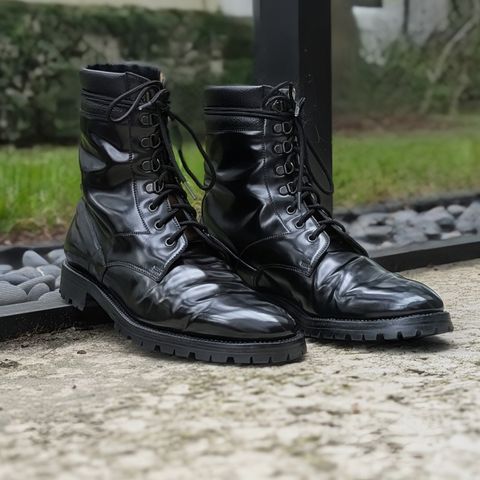
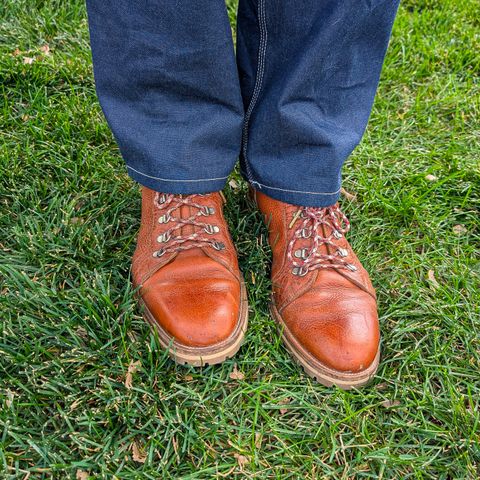
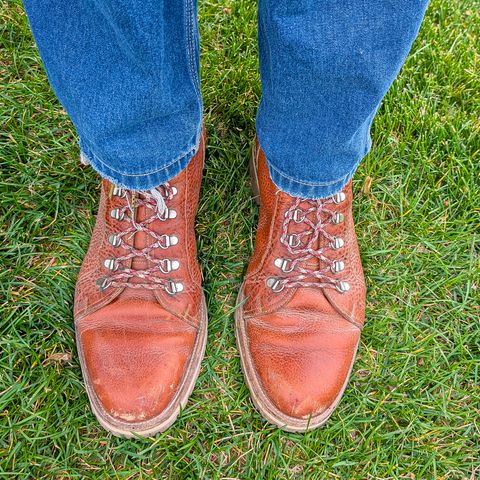
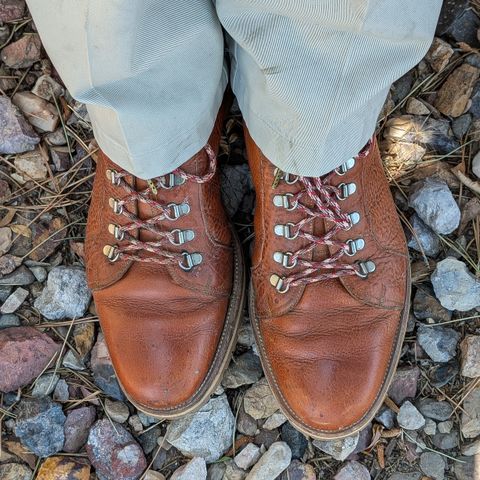
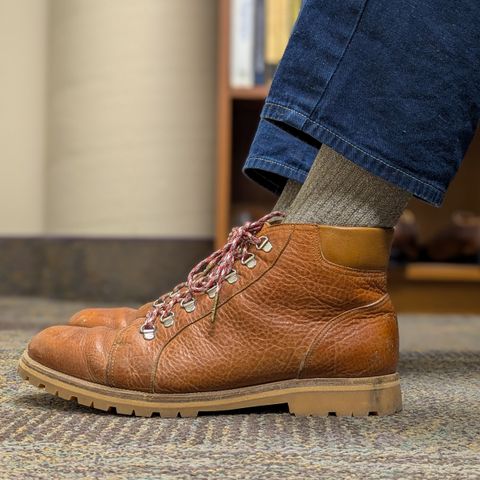
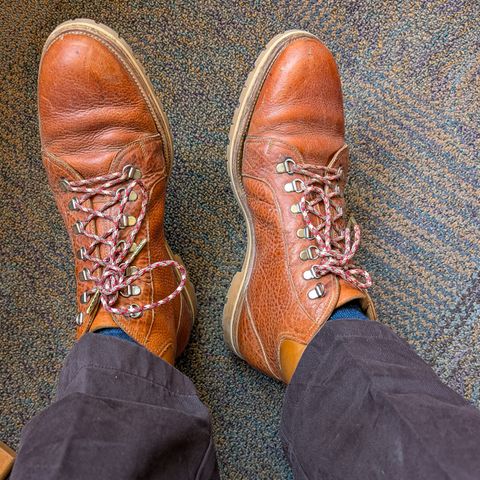
Enzo Bonafè produces dress shoes and boots across various styles, emphasizing traditional Italian elegance combined with robust construction methods. The product range includes button boots as a specialty offering, alongside oxfords, derbies, loafers, and various boot styles.
The company maintains flexibility in construction methods, allowing customers to specify techniques based on preference and intended use. Hand-welted shoes represent the flagship offering, showcasing the workshop's traditional expertise. Bologna construction provides a sleeker alternative for formal dress shoes, while Norwegian welting serves customers seeking weather resistance and durability.
All production emphasizes premium materials and extensive customization options, with the workshop accommodating special requests for leather types, sole choices, and fit adjustments. This made-to-order approach reflects the company's artisan heritage and limited production capacity, prioritizing customer satisfaction over volume manufacturing.
References