J.M. Weston
MakerAbout
J.M. Weston is a French luxury footwear manufacturer founded in 1891 in Limoges, France. The company is renowned for its handcrafted shoes produced using traditional Goodyear welt construction methods at its single factory in Limoges. J.M. Weston is particularly famous for the 180 Mocassin, a penny loafer that has become an icon of French casual elegance since its creation in 1946. The company distinguishes itself as the only shoemaker with its own sole leather tannery, the Tannerie Bastin in Saint-Léonard-de-Noblat.
About
J.M. Weston is a French luxury footwear manufacturer founded in 1891 in Limoges, France. The company is renowned for its handcrafted shoes produced using traditional Goodyear welt construction methods at its single factory in Limoges. J.M. Weston is particularly famous for the 180 Mocassin, a penny loafer that has become an icon of French casual elegance since its creation in 1946. The company distinguishes itself as the only shoemaker with its own sole leather tannery, the Tannerie Bastin in Saint-Léonard-de-Noblat.
With a heritage spanning over 130 years, J.M. Weston represents French craftsmanship traditions in luxury footwear, combining artisanal production methods with refined design aesthetics that have made the brand a symbol of understated elegance in European menswear.
History and development
J.M. Weston was founded by Édouard Blanchard in 1891 in Limoges, an ancient city in southwest France famous for its craftsmanship traditions, particularly in pottery and enameled jewelry. Édouard was soon joined by his son Eugène, who played a crucial role in the company's technical development and eventual naming.
Eugène Blanchard traveled to Weston, Massachusetts, near Boston in the United States, to learn the Goodyear stitching technique, which was revolutionizing shoe construction at the time. This American sojourn influenced both the company's manufacturing approach and its eventual name. The Goodyear welt construction method learned by Eugène became foundational to J.M. Weston's production philosophy, ensuring both durability and the possibility of resoling shoes throughout their lifetime.
In 1922, following a chance encounter at a horse race in Paris, Eugène Blanchard joined forces with Jean Viard. Together they opened the first J.M. Weston store on Boulevard de Courcelles in Paris, establishing the brand's presence in the capital and beginning its association with French haute société and refined taste.
The 180 Mocassin
Created in 1946, the 180 Mocassin represents J.M. Weston's most iconic model and one of the most recognizable loafers in luxury footwear. The name derives from the 180 individual operations required to craft a pair at the Limoges factory, a process that takes approximately one week to complete. This penny loafer design embodies the company's commitment to artisanal production methods maintained from start to finish in a single location.
The 180 Mocassin gained cultural significance in the 1960s when it was adopted by the Bande du Drugstore, a post-beatnik Parisian social group whose members included future cultural luminaries. This association cemented the shoe's status as a symbol of intellectual French casual style, transcending mere fashion to become a cultural marker of a particular aesthetic and lifestyle.
The model's enduring popularity has made it synonymous with French elegance, worn by generations of Parisians and fashion enthusiasts worldwide. Its design represents a refinement of the American penny loafer tradition through a distinctly French lens, emphasizing sleek proportions and impeccable finishing.
Other signature models
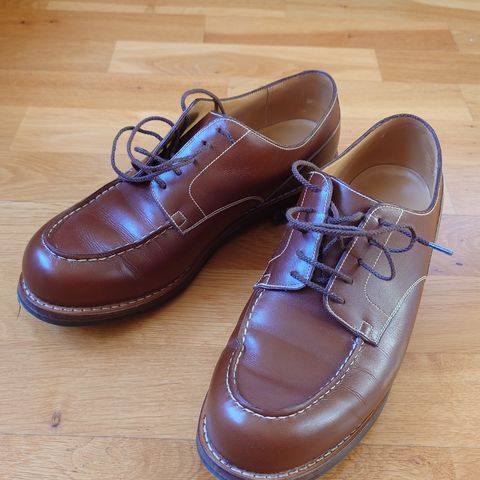
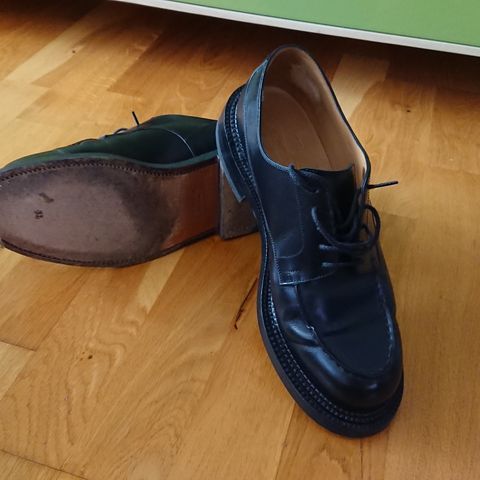
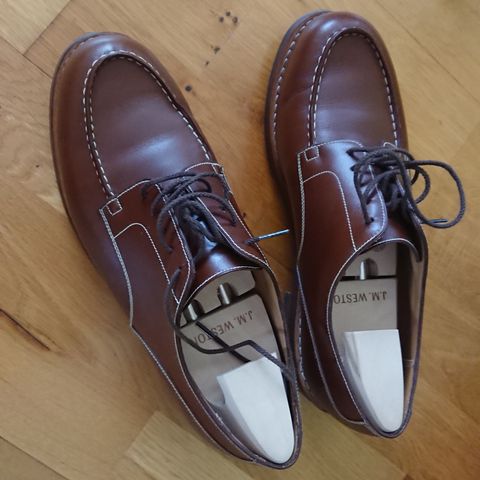
Beyond the 180 Mocassin, J.M. Weston has developed several other iconic models that represent different aspects of the brand's range. The 677 Chasse is a Derby-style shoe originally designed for hunting, featuring robust construction suitable for outdoor activities while maintaining the brand's aesthetic refinement. The 598 Demi-Chasse offers a variation on this theme, providing a semi-formal option that bridges casual and dress footwear.
These models demonstrate J.M. Weston's ability to apply its manufacturing expertise and design philosophy across different shoe types, from loafers to lace-up styles, while maintaining consistent quality standards and distinctive French character.
Manufacturing and craftsmanship
All J.M. Weston shoes are manufactured at the company's single factory in Limoges, maintaining complete control over the production process from initial cutting to final finishing. This vertical integration allows for rigorous quality control and the preservation of traditional techniques that might be lost in distributed manufacturing models.
The company employs Goodyear welt construction throughout its range, a method that provides exceptional durability, water resistance, and the ability to resole shoes multiple times throughout their lifetime. Each pair undergoes extensive handwork, with skilled artisans performing numerous individual operations that cannot be replicated by machine production.
J.M. Weston distinguishes itself as the only shoemaker operating its own sole leather tannery, the Tannerie Bastin located in Saint-Léonard-de-Noblat. This unique arrangement ensures complete control over leather quality and characteristics, allowing the company to specify exact tanning processes and leather properties suited to its manufacturing needs.
Product range
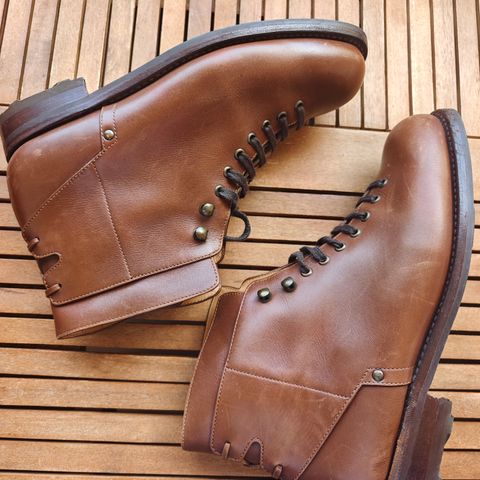
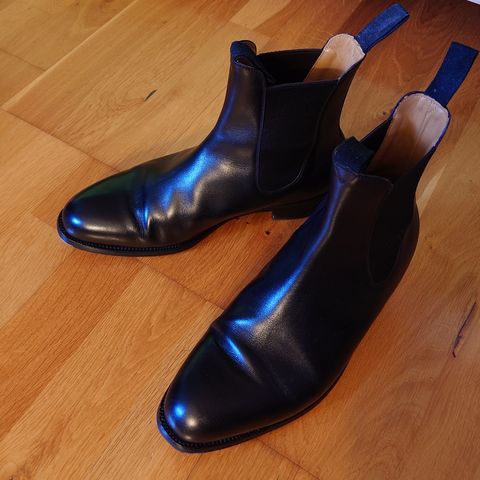
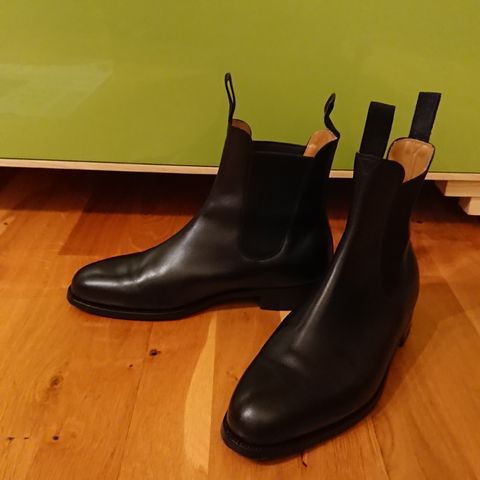
J.M. Weston offers a comprehensive range of footwear for both men and women, including loafers, Derby shoes, Oxford shoes, boots, and leather accessories. The collection maintains a consistent aesthetic characterized by refined proportions, subtle detailing, and an emphasis on wearability and comfort.
Beyond footwear, the company has expanded into leather goods including belts, luggage, and small leather accessories, applying the same quality standards and craftsmanship traditions that define its shoe production. These complementary products allow customers to extend the J.M. Weston aesthetic across multiple aspects of their wardrobes.
Cultural significance
J.M. Weston occupies a particular position in French cultural life, representing a certain vision of understated elegance and intellectual style. The brand's association with the Bande du Drugstore in the 1960s established its credentials with a cultural elite that valued quality and heritage over obvious fashion statements.
This cultural positioning has been maintained through subsequent decades, with J.M. Weston shoes remaining popular among those seeking classic French style that transcends seasonal trends. The brand represents an approach to footwear that emphasizes longevity, quality, and timeless design over fashion-forward innovation.
References
"J. M. Weston". Wikipedia. Retrieved November 11, 2025.
"Parisian Casual: J.M. Weston's Iconic Model 180". Trunk Clothiers. Retrieved November 11, 2025.
"History". J.M. Weston. Retrieved November 11, 2025.