About
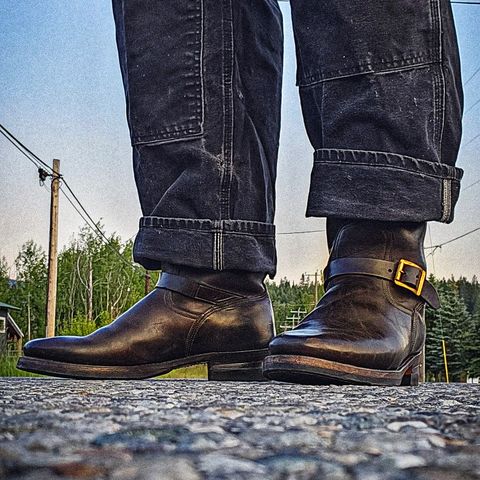
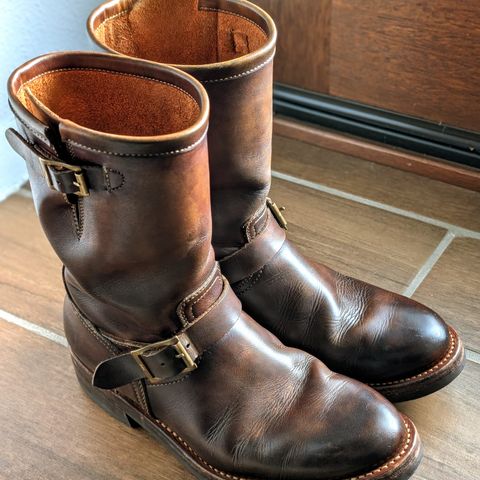
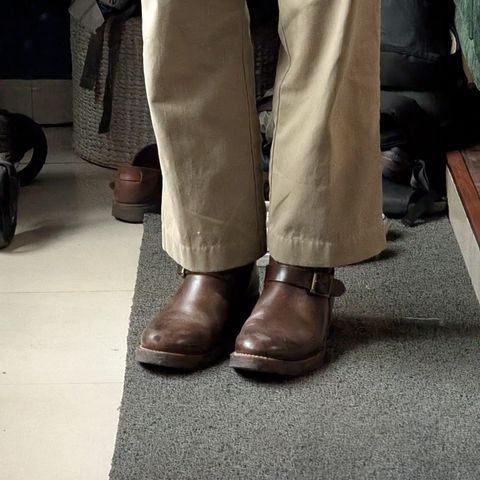
The Engineer Boots are a style of tall leather work boots produced by Motor, a Japanese leather goods manufacturer founded in 1971. While Motor creates engineer boots using traditional construction methods and materials including cordovan, elephant leather, and kudu, specific technical details about Motor's engineer boot production are limited in publicly available sources.
About
The Engineer Boots are a style of tall leather work boots produced by Motor, a Japanese leather goods manufacturer founded in 1971. While Motor creates engineer boots using traditional construction methods and materials including cordovan, elephant leather, and kudu, specific technical details about Motor's engineer boot production are limited in publicly available sources.
History
Engineer boots were first produced by Chippewa and Wesco between 1937 and 1939. The Chippewa Shoe Manufacturing Company, founded in 1901 in Chippewa Falls, Wisconsin, originally served laborers including loggers, railroad workers, engineers, and construction workers. In 1939, Wesco introduced its Boss engineer boots specifically for West Coast shipyard workers who needed protection from molten welding slag. According to Wesco CEO Roberta Shoemaker, there were large shipyards in Portland and the welders making the ships needed boots they could kick off quickly should sparks get down inside them.
The name "engineer" actually referenced engineering work like surveying, not train engineers, as part of a broader naming convention for worker-oriented products. The popular myth that engineer boots were designed for train engineers is inaccurate since the United States had phased out steam engines before these boots entered the market. The boots addressed genuine workplace safety needs in assembly lines, boiler rooms, and steel mills during the pre-World War II industrial era.
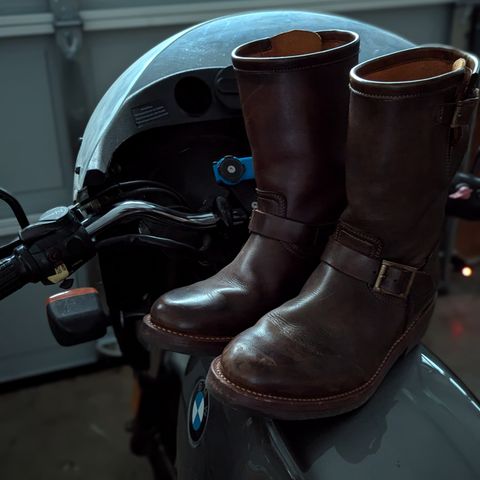
Following Marlon Brando's appearance in The Wild One in 1953, engineer boots gained popularity among motorcycle enthusiasts. The boots became a rebellious fashion statement and eventually transitioned to mainstream high-fashion status.
Design and construction
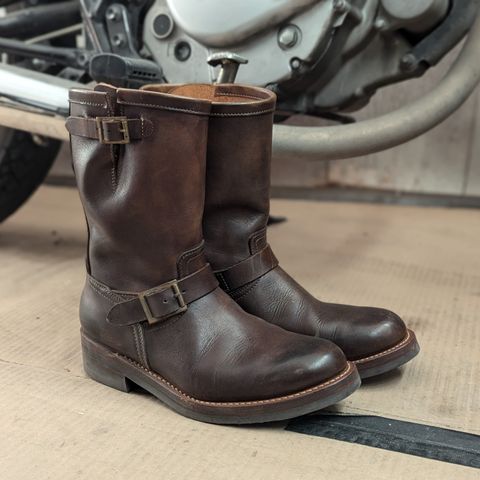
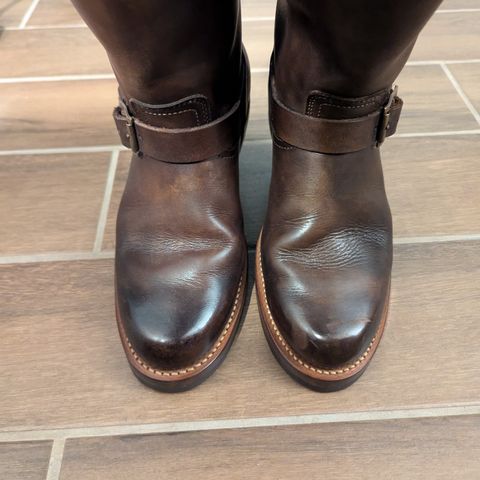
Engineer boots typically feature black or brown full-grain leather construction with a distinctive tall stovepipe-style leather shaft extending seven to 17 inches. The closure system uses adjustable leather straps with metal buckles at the ankle and shaft top, with no laces. This no-lace design prevented entanglement with machinery, a critical hazard in industrial settings. The double-layer shaft protects against heat, water, and debris.
Construction techniques include stitch-down or Goodyear welted construction with full or half rubber outsoles. The rounded toe design allowed hot slag to roll away during welding rather than accumulating. Chippewa is credited with inventing the original Engineer Boot and patented the Kush-N Collar, a padded collar technology, in 1961. The United States military selected Chippewa boots as official footwear during both World War I and World War II. The company is now part of Justin Brands and backed by Berkshire Hathaway.
Japanese manufacturers including The Flat Head and John Lofgren Bootmaker produce engineer boots crafted in Japan. The Flat Head engineer boots, priced at 995 dollars, feature natural pull-up Chromexcel leather with high oil content from aniline dyeing. Construction includes Goodyear storm welting, Vibram 700 and 705 soles, and Japanese-made steel shanks, with a height of approximately 9.5 inches. Hardware includes custom Japanese-made brass and iron buckles, with triple-stitch and single-stitched construction methods and hand-stitched shaft seams. Sizing runs approximately one full size larger than Brannock device sizing.
John Lofgren Bootmaker produces engineer boots crafted in Japan by artisans in Sendai, featuring Goodyear welted construction for durability. Materials are ethically sourced from Japan, the United States, the United Kingdom, France, Germany, and Italy.
References
"MOTO". MOTO Official Website. No date. Retrieved December 21, 2025.
"The Flat Head Engineer Boots". Self Edge. No date. Retrieved December 21, 2025.
"John Lofgren Bootmaker". John Lofgren Official Website. No date. Retrieved December 21, 2025.
"Engineers Get the Boot". American Society of Mechanical Engineers. August 6, 2015. Retrieved December 21, 2025.
"Our Story". Chippewa Boots. No date. Retrieved December 21, 2025.
"A History of Engineer Boots". Standard & Strange. November 16, 2023. Retrieved December 21, 2025.