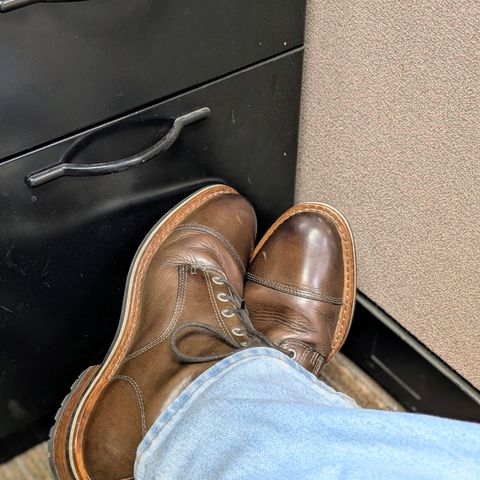
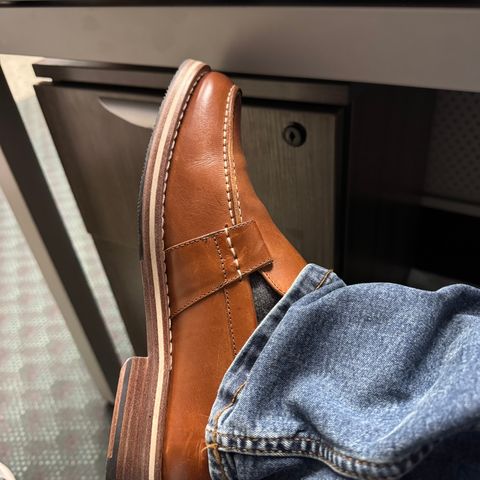
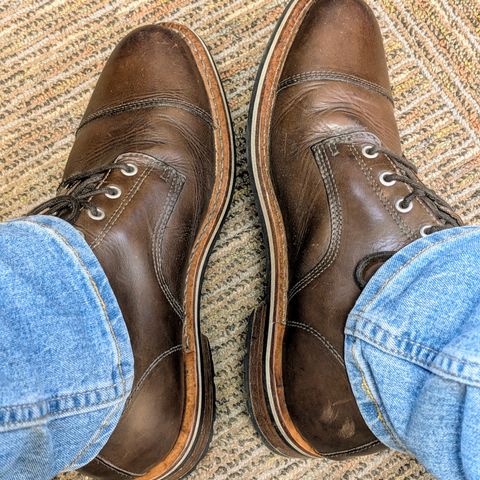
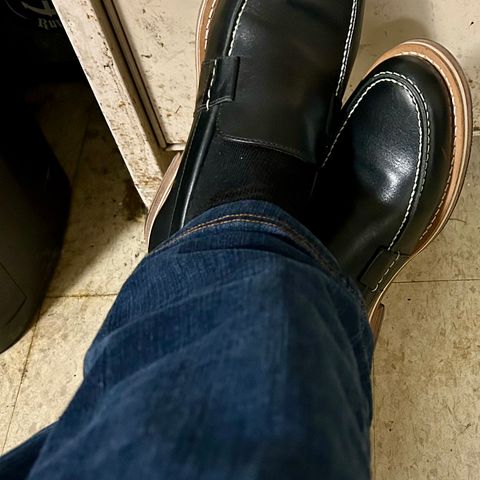
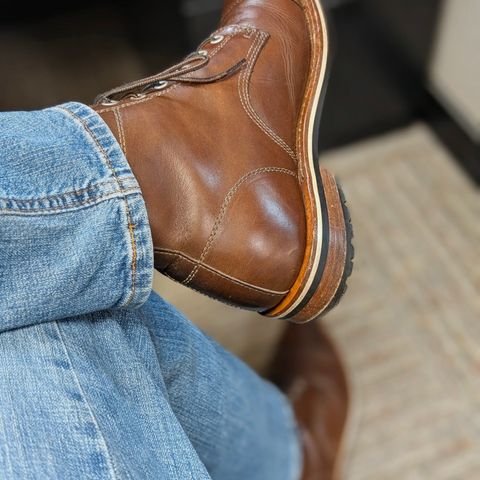
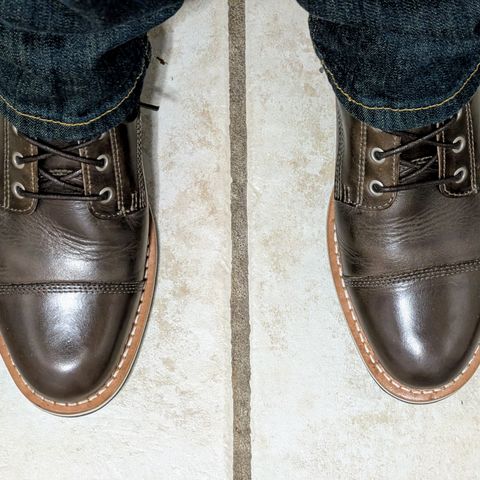
HELM Boots
MakerAbout
HELM Boots is an American footwear company founded in 2009 by Joshua Bingaman in Austin, Texas. The company produces handcrafted boots and shoes using premium American leather and traditional construction methods including Goodyear Welt and Blake Rapid stitch techniques. After initially manufacturing in Istanbul, HELM brought production to the United States in 2012, currently operating workshops in Maine and Arkansas while maintaining design operations in Austin.
About
HELM Boots is an American footwear company founded in 2009 by Joshua Bingaman in Austin, Texas. The company produces handcrafted boots and shoes using premium American leather and traditional construction methods including Goodyear Welt and Blake Rapid stitch techniques. After initially manufacturing in Istanbul, HELM brought production to the United States in 2012, currently operating workshops in Maine and Arkansas while maintaining design operations in Austin.
The company's "Footwear for Life" philosophy emphasizes expert craftsmanship, premium materials, and exceptional service. HELM positions itself as an independent company maintaining quality standards without compromises, combining timeless construction methods with carefully sourced materials to create footwear engineered for extended service life.
Founding and Early History
Joshua Bingaman founded HELM Boots in 2009 in Austin, Texas, launching the company as an independent venture focused on handcrafted footwear. The founding vision centered on creating boots that combined traditional construction techniques with contemporary design sensibilities while maintaining accessible price points relative to fully bespoke options.
The company initially contracted manufacturing to a workshop in Istanbul, Turkey, a region with established footwear production infrastructure and skilled craftspeople. This overseas production arrangement allowed the company to begin operations while controlling design and material specifications from the Austin headquarters.
As HELM grew and refined its approach, the company made a strategic decision to bring manufacturing back to the United States. In 2012, HELM established domestic production capabilities, a significant undertaking requiring investment in workshop facilities, equipment, and trained craftspeople.
Manufacturing and Production
HELM currently manufactures footwear in workshops located in Maine and Arkansas, two states with historical connections to American footwear production. Maine's leather industry and shoemaking tradition, particularly in the Portland area, provided access to skilled craftspeople and supporting infrastructure. Arkansas offered similar advantages with established boot production facilities and available workforce experienced in traditional construction methods.
The production process involves 153 distinct steps performed by 14 master cobblers. This extensive step count reflects the complexity of traditional boot construction, where numerous operations must be completed in proper sequence to ensure structural integrity and quality. The relatively small team of 14 craftspeople indicates deliberate production scale prioritizing quality over volume.
HELM designs all footwear in Austin, Texas, maintaining separation between design functions and manufacturing operations. This structure allows designers to focus on product development, material selection, and aesthetic refinement while production specialists concentrate on construction execution and quality control.
Construction Methods
HELM employs two primary construction techniques: Goodyear Welt and Blake Rapid stitch. The choice between methods depends on the specific boot model and intended characteristics.
Goodyear Welt construction involves stitching the upper to a welt, which is then stitched to the sole. This creates a cavity between insole and outsole typically filled with cork, which conforms to the wearer's foot over time. Goodyear construction is prized for water resistance, durability, and ease of resoling, though it produces a stiffer initial feel that requires break-in.
Blake Rapid construction uses a chain stitch to attach the sole directly to the insole and upper from inside the boot, with an additional rapid stitch attaching the midsole to outsole. This method creates a slimmer profile and more flexible feel compared to Goodyear welting while maintaining resoling capability.
The use of both construction methods allows HELM to match technique to intended boot characteristics, using Goodyear for heavy-duty work boots where maximum durability is priority, and Blake Rapid for sleeker profiles where flexibility and lighter weight are valued.
Leather Sourcing
HELM sources premium leather from three renowned American tanneries, each with distinct specialties and heritage. Horween Leather Company in Chicago, founded in 1905, is among the oldest continuously operating tanneries in America, known for Shell Cordovan and Chromexcel leathers widely respected for quality and character.
S.B. Foot Tanning Co. in Red Wing, Minnesota, is a subsidiary of Red Wing Shoes, producing leather specifically for boot construction with emphasis on durability and break-in characteristics. The Red Wing location places S.B. Foot within Minnesota's leather industry concentration.
Tasman Industries in Hartland, Maine, represents the New England leather tradition, producing boot and shoe leathers from American hides. The Maine location provides geographic proximity to HELM's northeastern manufacturing operations.
By sourcing exclusively from American tanneries, HELM supports domestic leather industry while ensuring material quality and ethical sourcing standards. This commitment to American leather distinguishes HELM from competitors using imported materials, though it requires higher material costs.
Product Philosophy
HELM's "Footwear for Life" tagline encapsulates the company's approach to boot design and construction. This philosophy prioritizes longevity and repairability over fashion cycles, engineering boots to provide extended service through multiple resolings rather than requiring replacement after limited wear.
The emphasis on expert craftsmanship acknowledges that skilled labor remains essential despite technological advances in footwear manufacturing. HELM's choice to employ master cobblers rather than minimally trained assembly line workers reflects belief that experienced craftspeople produce superior results.
The company's commitment to premium materials extends beyond leather to include hardware, thread, and construction components. This comprehensive attention to material quality aims to eliminate weak points that might cause premature failure.
Exceptional service completes HELM's value proposition, providing customer support including fit guidance, care instructions, and assistance with repairs or resoling. This service commitment recognizes that footwear requiring break-in and maintenance benefits from ongoing manufacturer support.
Design Approach
HELM designs emphasize versatility, creating boots suitable for multiple contexts rather than highly specialized styles. This approach produces footwear appropriate for business casual dress, weekend wear, and light work applications, maximizing utility for customers seeking boots that can serve various roles.
The aesthetic tends toward clean lines and traditional styling rather than fashion-forward or highly decorated designs. This conservative approach supports the company's longevity focus, as classic styles remain relevant longer than trend-driven designs.
The company offers various boot heights, toe shapes, and style details within its core models, providing choice without overwhelming customers with excessive options. This curated selection balances variety with focused production capabilities.
Handcrafted vs. Handmade
HELM explicitly distinguishes between "handmade" and "handcrafted" in its marketing, choosing "handcrafted" as a more accurate descriptor. The company's blog post addressing this distinction explains that while skilled craftspeople perform the work, modern tools and equipment assist in various production stages.
This transparency about manufacturing processes reflects confidence in the company's methods rather than relying on romantic notions of entirely manual production. The handcrafted designation acknowledges both human skill and appropriate technology use, presenting a realistic picture of contemporary craft production.
Market Position
HELM occupies a market position between entry-level work boots and premium heritage brands. The company's pricing reflects quality materials and construction while remaining accessible compared to fully bespoke options or highest-tier heritage brands.
The American manufacturing and leather sourcing appeal to customers valuing domestic production and supporting American craft industries. This positioning differentiates HELM from competitors manufacturing overseas, though it requires premium pricing to cover higher labor and material costs.
The company's independence since founding allows flexibility in decision-making without pressure from external investors to compromise quality for short-term profit. This independence supports the long-term approach inherent in the "Footwear for Life" philosophy.
References
"HELM Boots, Shoes, and Sneakers - Designed in Austin, TX". HELM Boots. Retrieved November 2025.
"Men's Boots Designed in the USA". HELM Boots. Retrieved November 2025.
"Handmade and Handcrafted: Why HELM Boots Chooses The Latter". HELM Boots. Retrieved November 2025.
"Helm Boots". Wikipedia. Retrieved November 2025.